Exhibition & Fundraiser
WOVEN
IN CODE
A generative embroidery system rooted in Palestinian tatreez — bringing a centuries-old textile tradition into a new algorithmic form.
All proceeds support humanitarian relief in Palestine.
seed · palette · composition · form
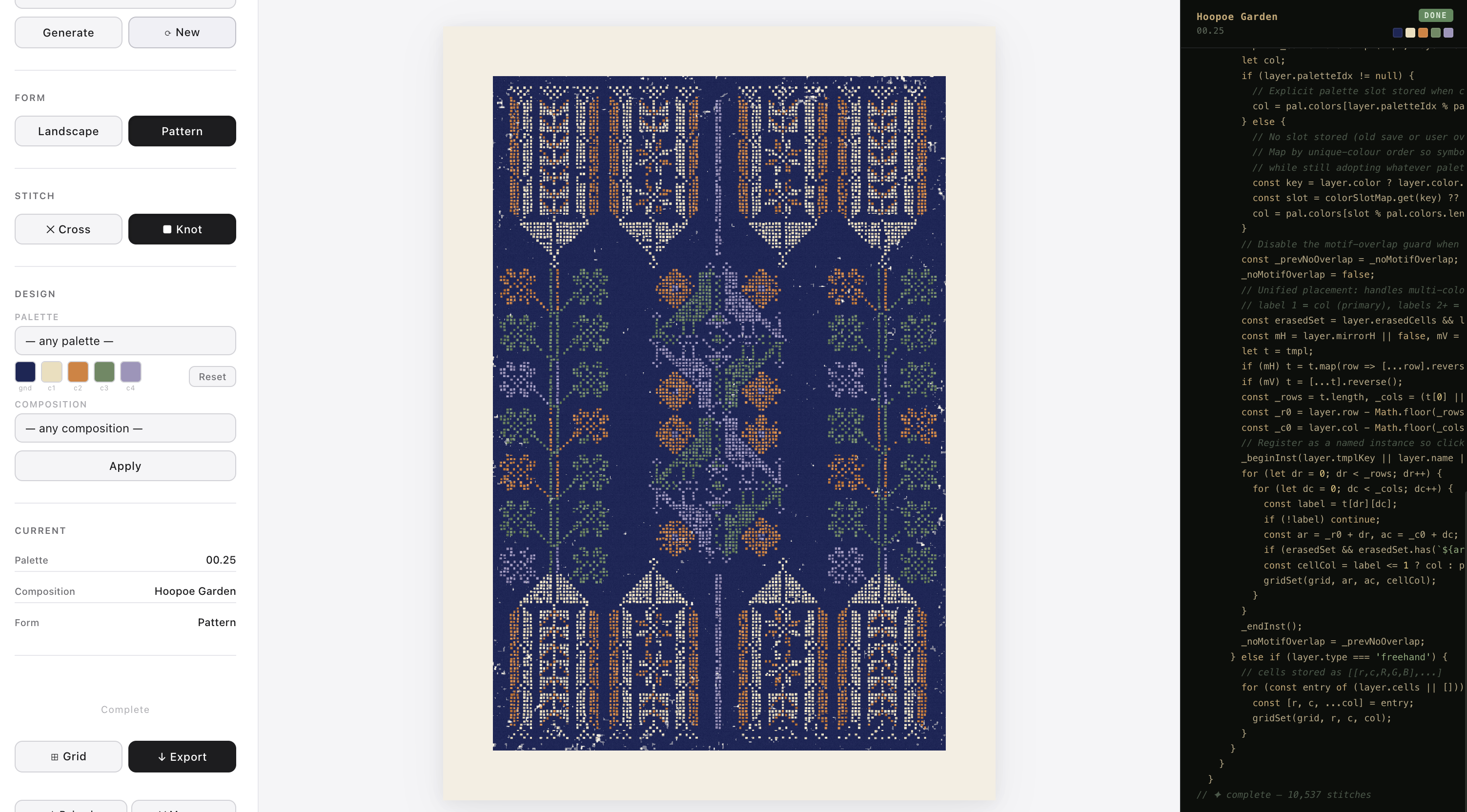
Woven in Code — Hoopoe Garden
Palestinian Tatreez
A language stitched into cloth.
Tatreez is a centuries-old embroidery tradition practiced by Palestinian women. Each region — each village — developed its own distinct motifs, color codes, and compositional grammar. A dress could tell you exactly where a woman was from.
More than decoration, tatreez was documentation — a living archive of identity, place, and belonging, passed mother to daughter across generations.
Studio — Tatreez pattern
Studio — Tatreez pattern 2
Why it matters now
When a culture is displaced,
its patterns remember.
Tatreez has survived conquest, exile, and erasure because it was carried in the hands of women. Every stitch is an act of memory. Every pattern, a refusal to disappear.
Woven in Code asks: how do we carry that memory forward?
The Generative System
Three tools. One living archive.
The Studio
The Studio
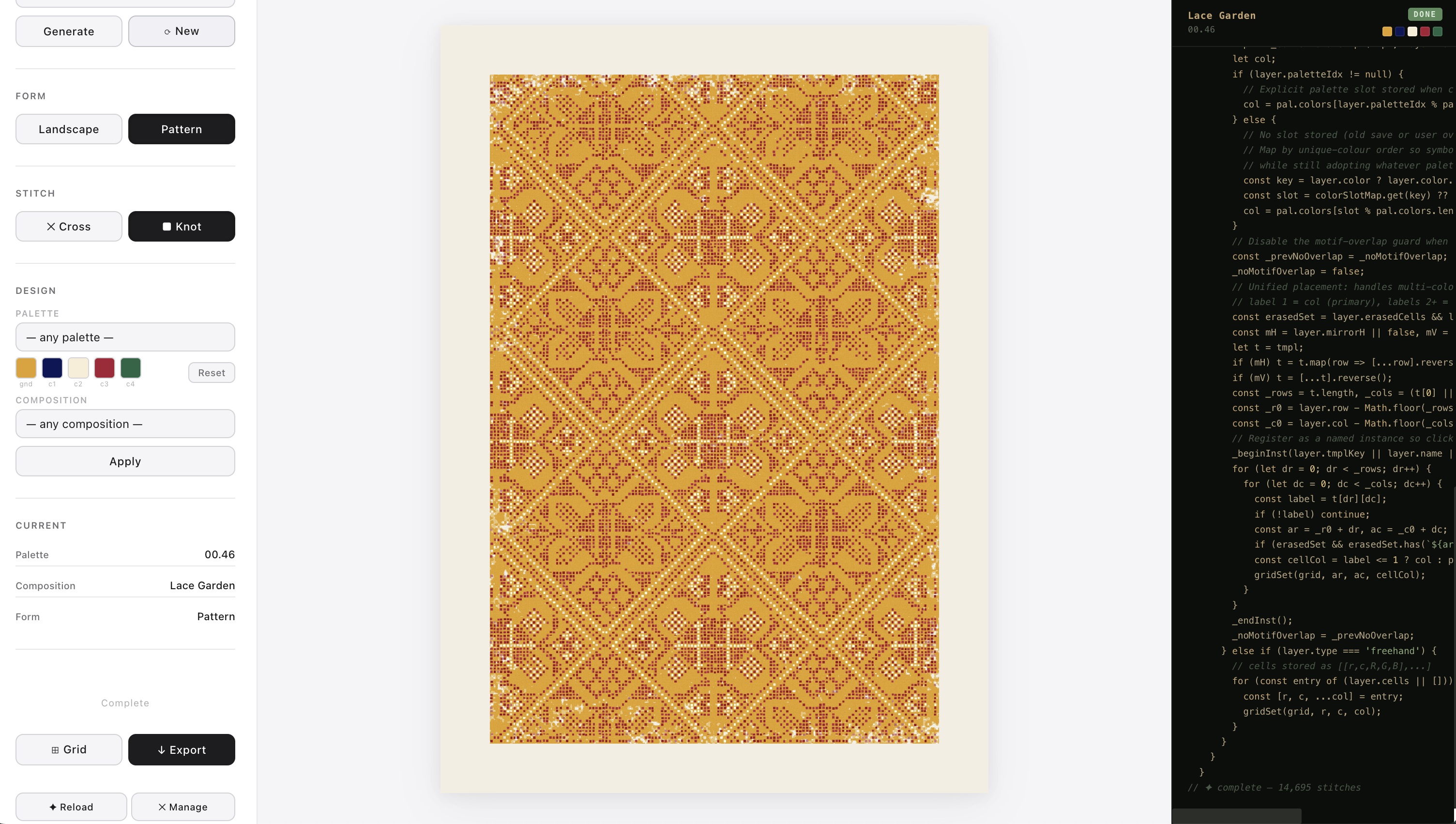
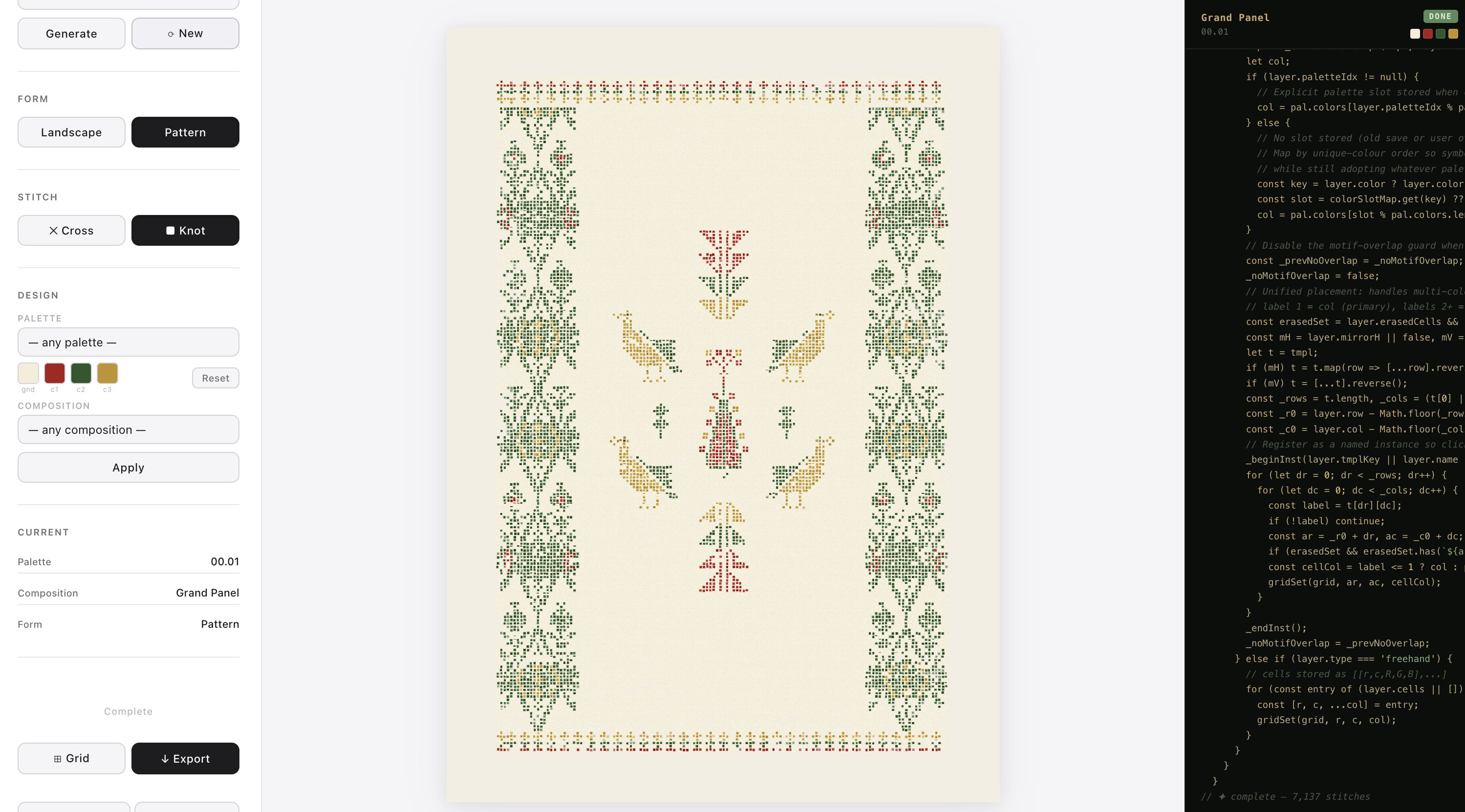
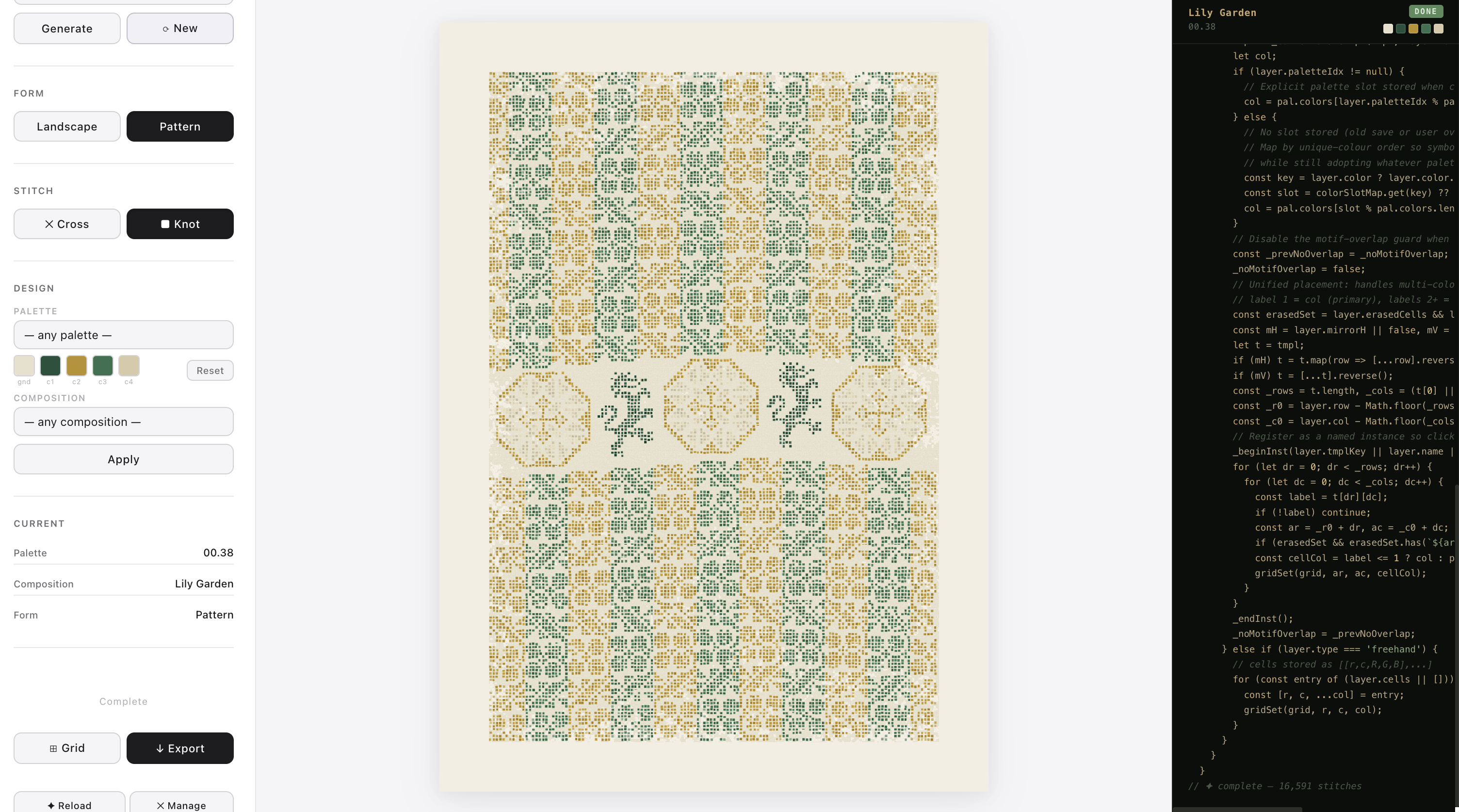
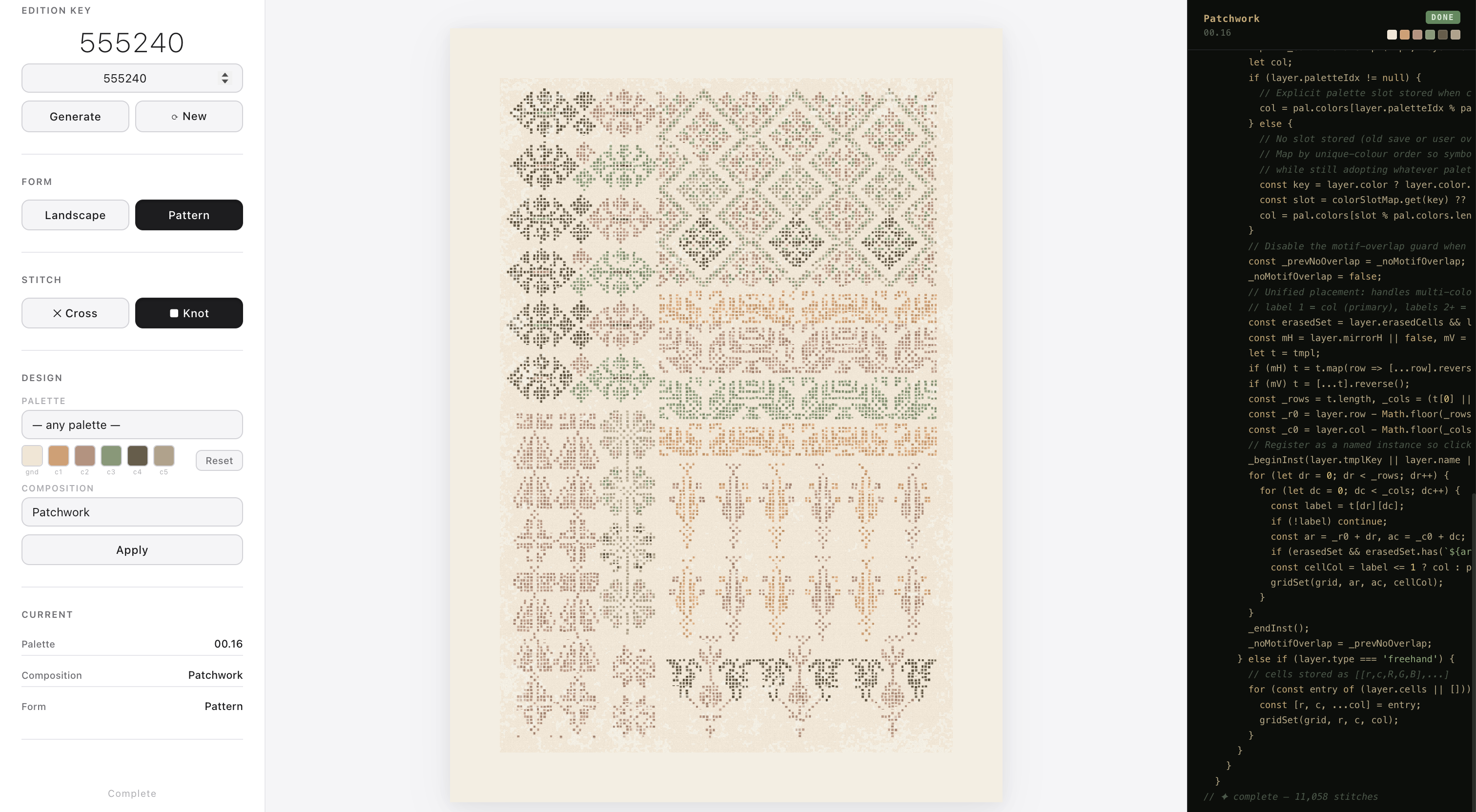
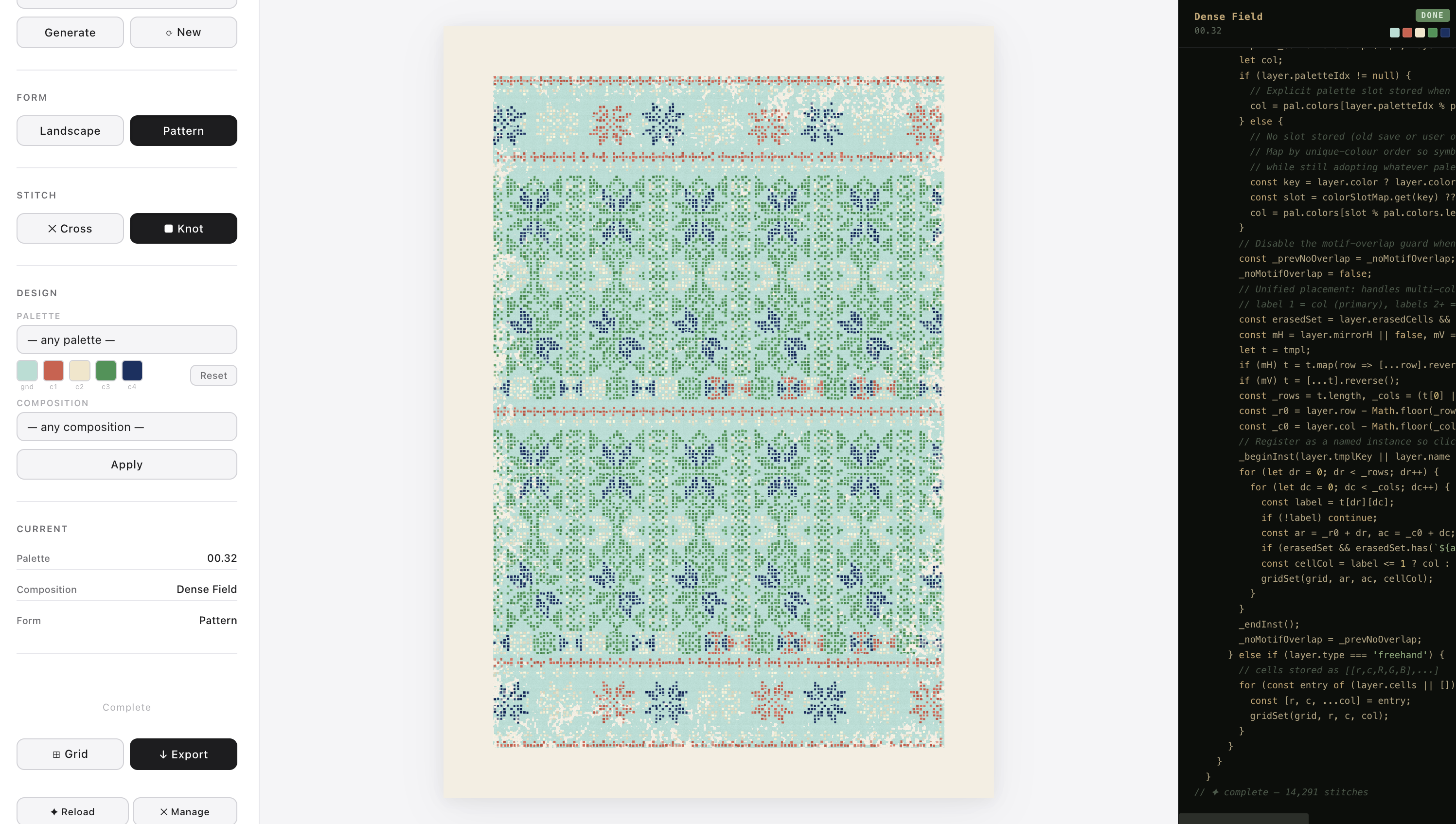
Composes full embroidery works from a single seed number — selecting motifs, palettes, and layouts from a vocabulary of 970+ digitized symbols.
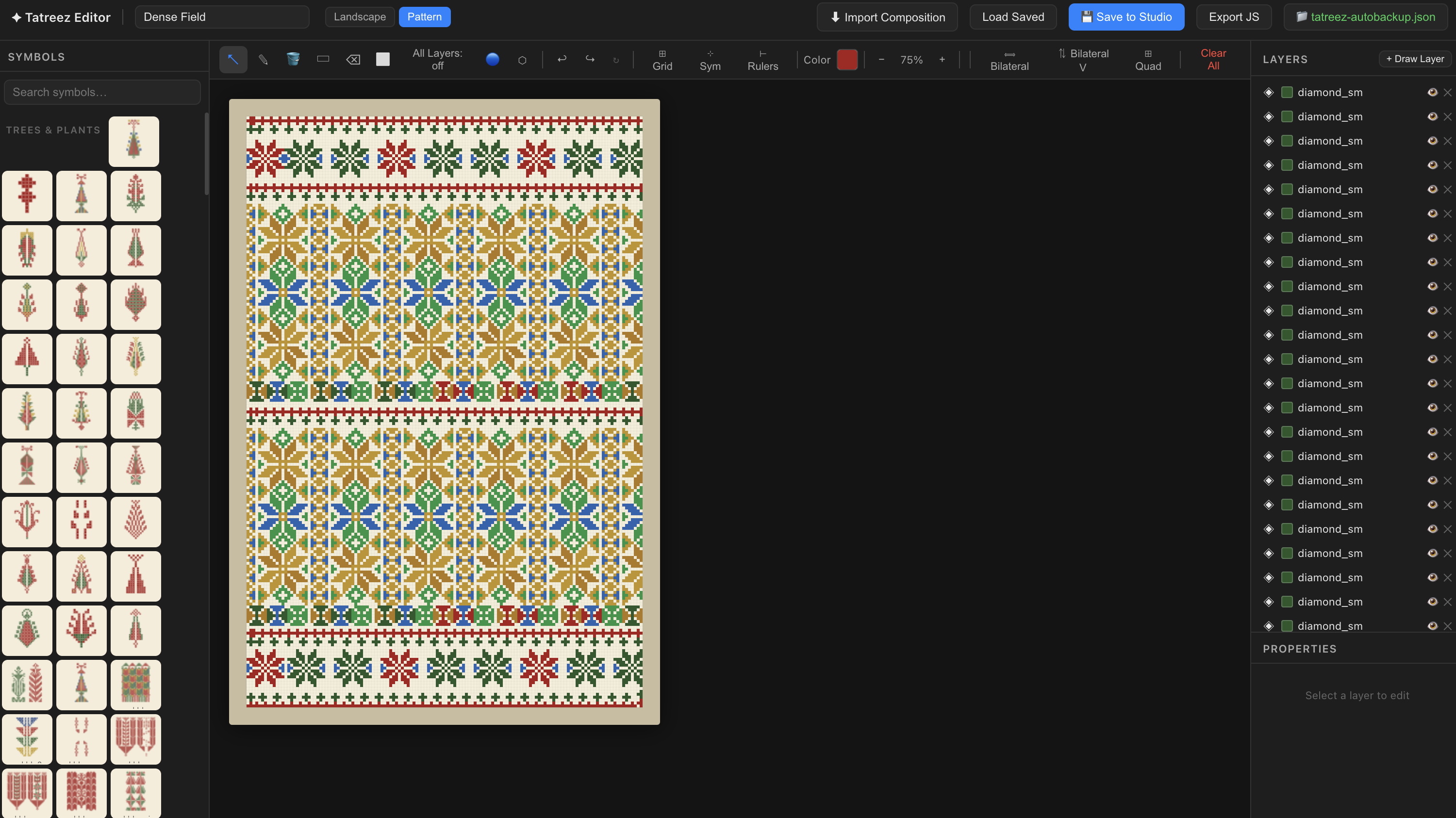
The Editor
The Editor
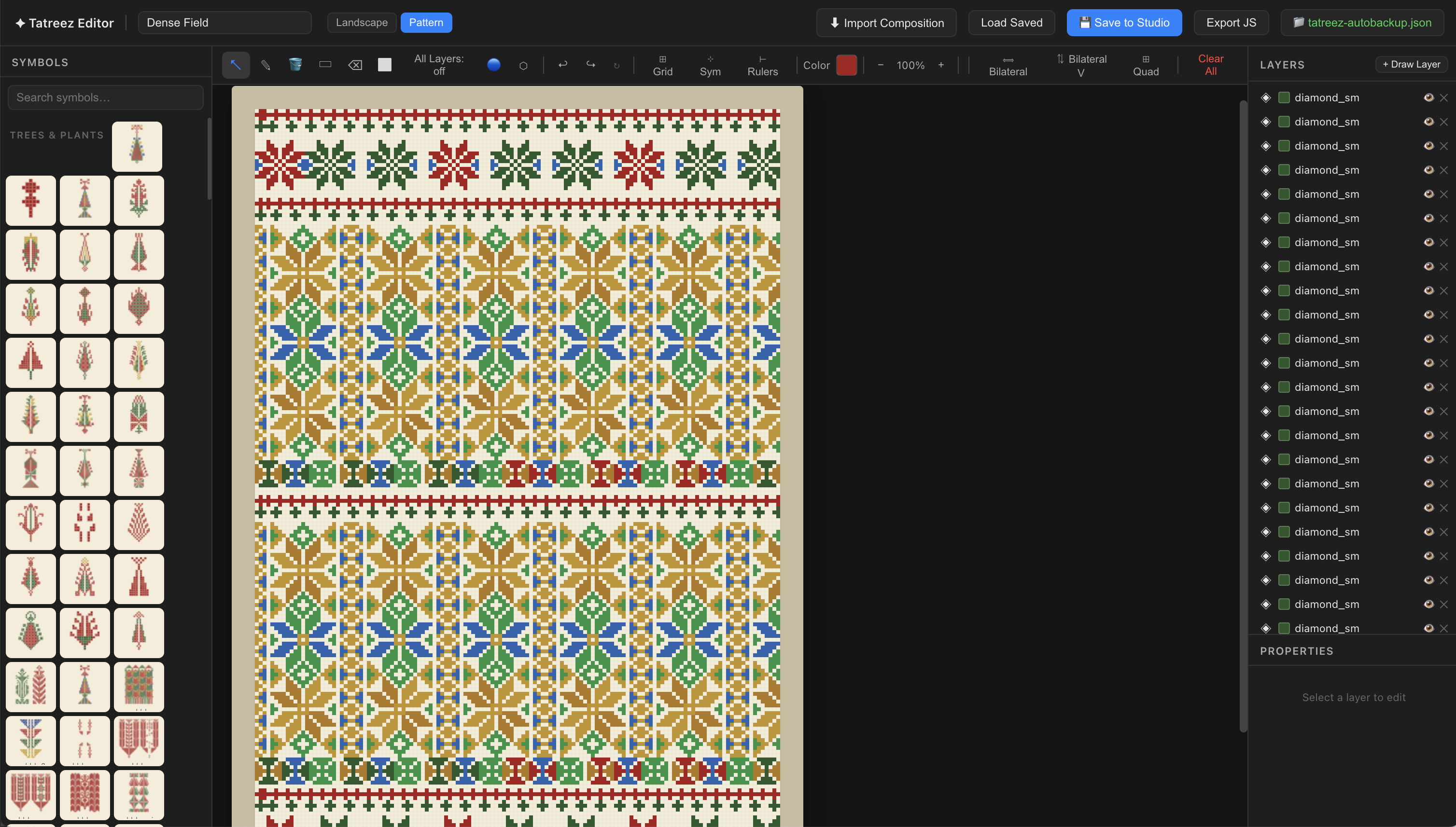
An artist's canvas for placing symbols, painting zone backgrounds, and saving compositions. Human intention meets algorithmic output.
The Archive
The Archive
970+ motifs digitized from 30+ Palestinian villages — Ramallah, Bethlehem, Hebron, Gaza, and beyond. The symbolic vocabulary the system draws from.
The Studio
Every seed is a unique composition.
Studio — composition detail
Studio — full composition view · Knot Stitch · Citrus Fade Palette — click to expand
Studio full view
Pattern Variations
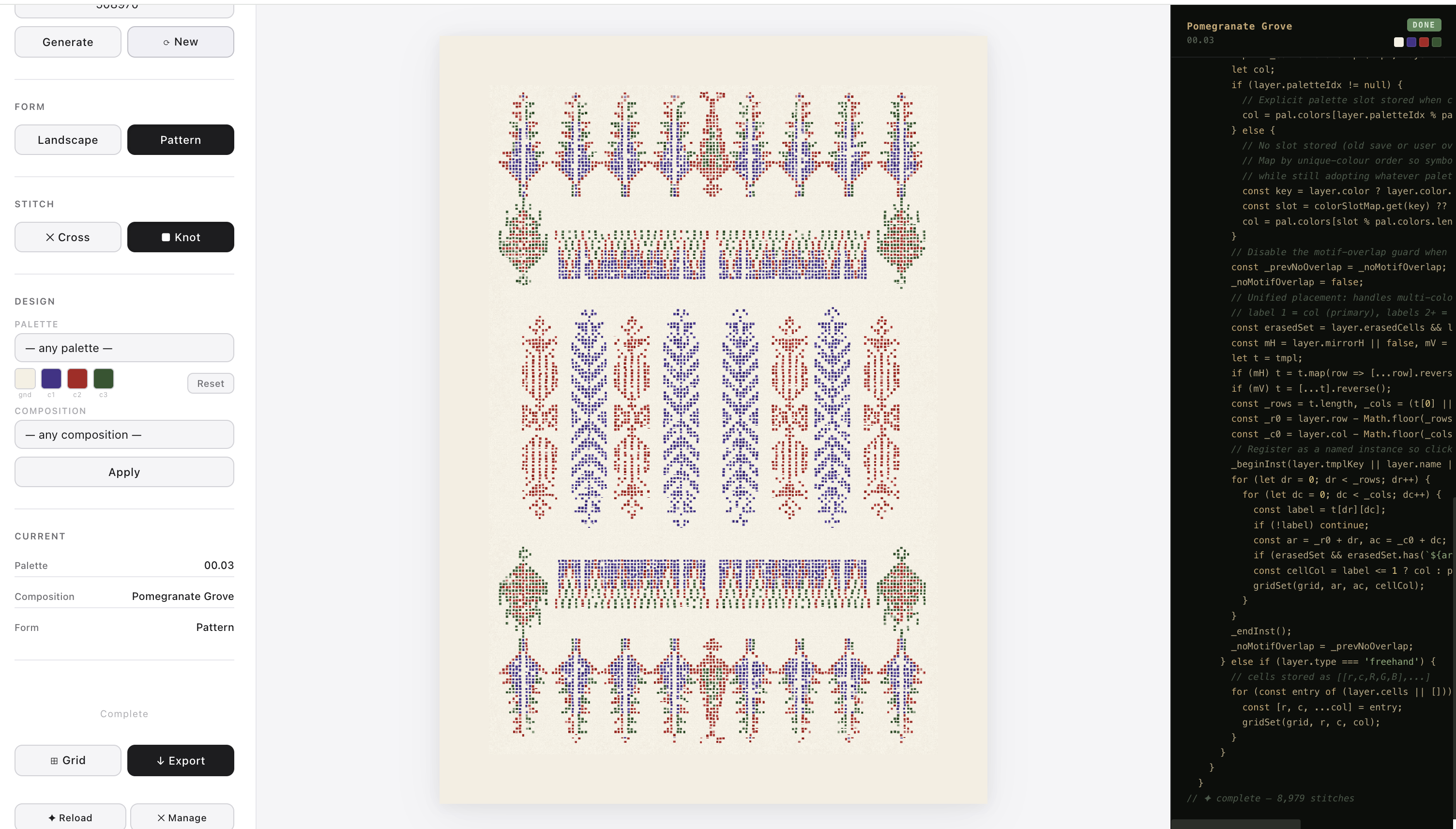
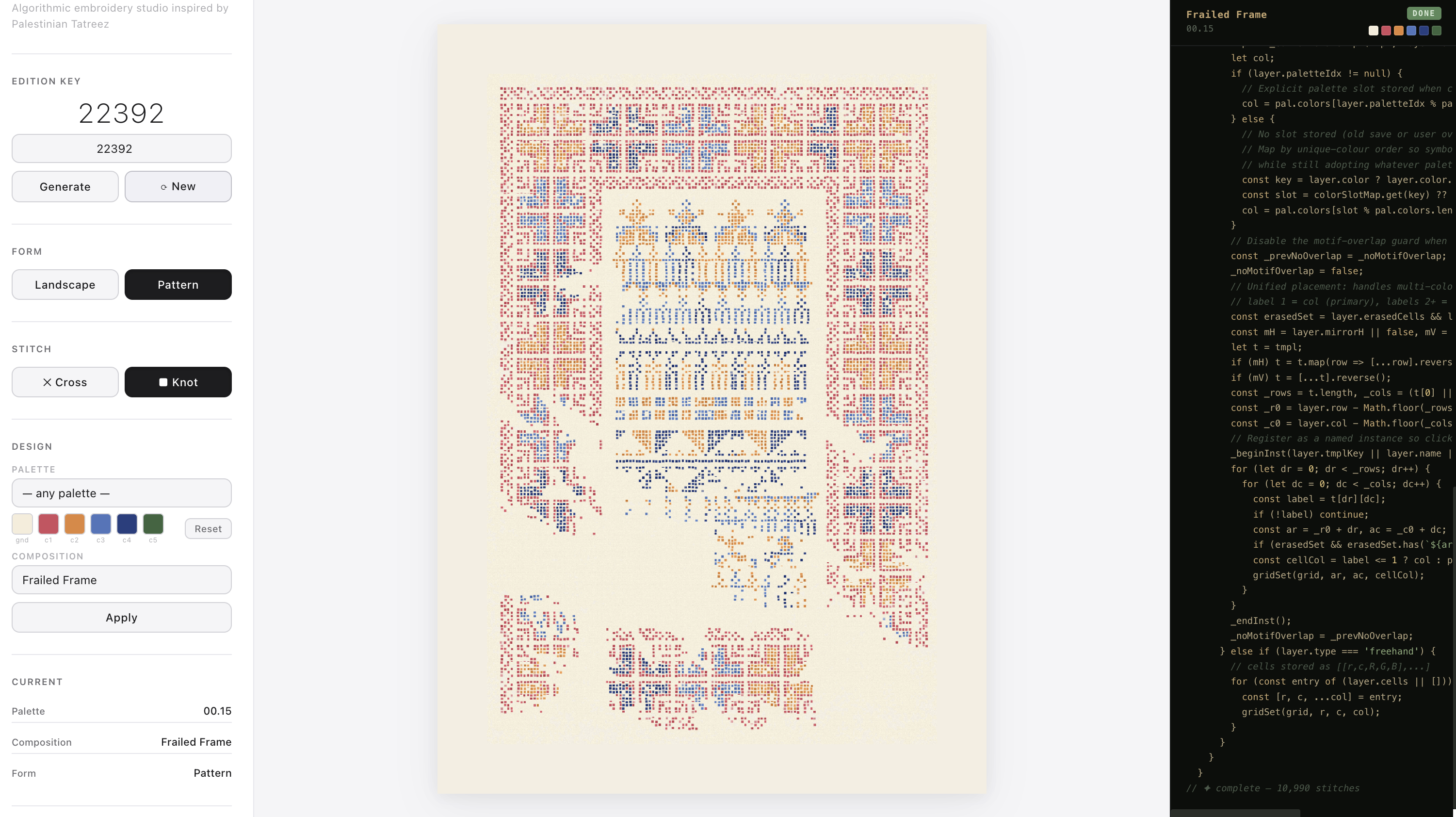
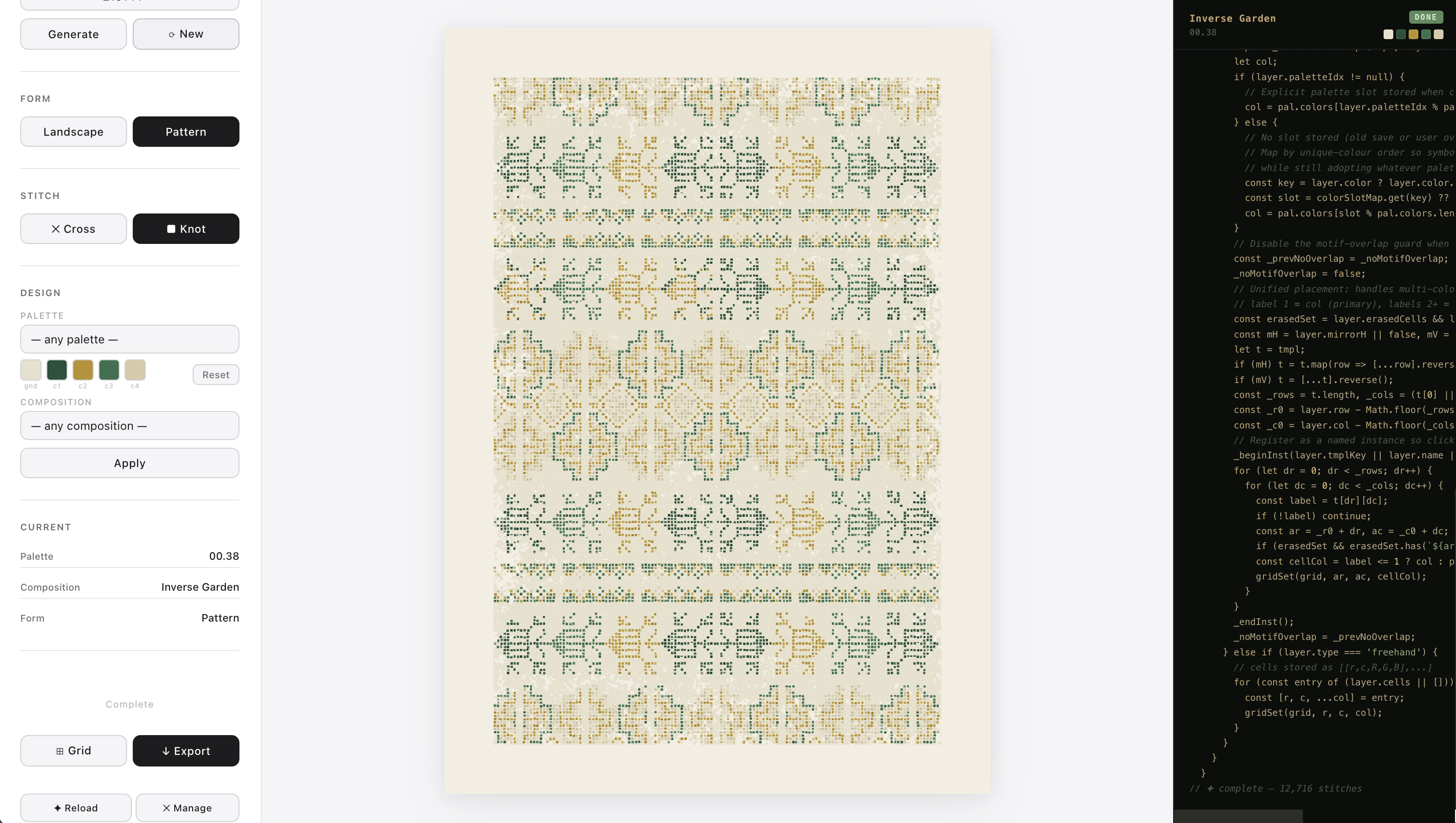
Same motifs. Infinite compositions.
Studio composition
Pomegranate Gloss
Frailed Frame
Three seeds · three motif selections · three palettes — click any to expand
Landscape Mode
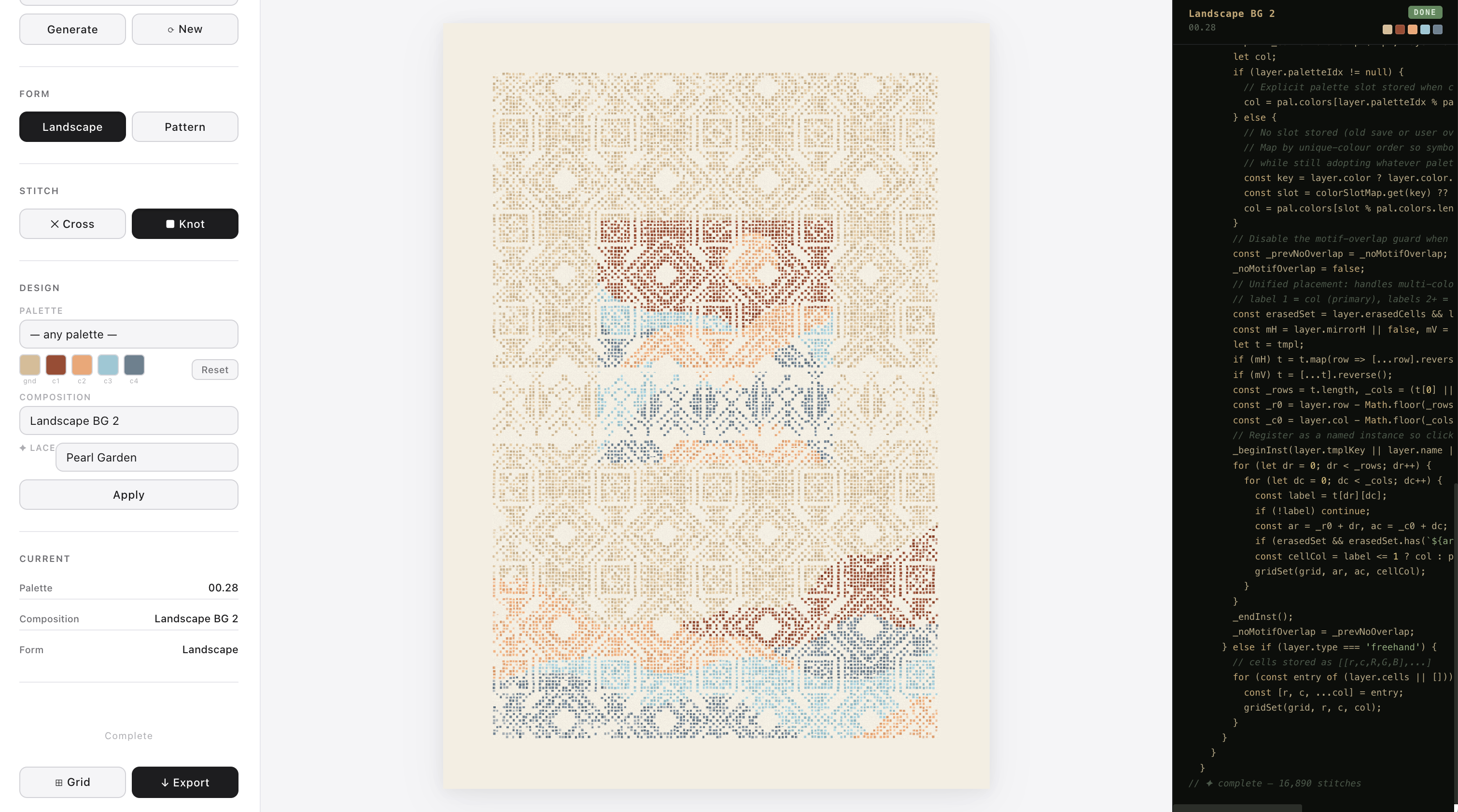
Pattern becomes place.
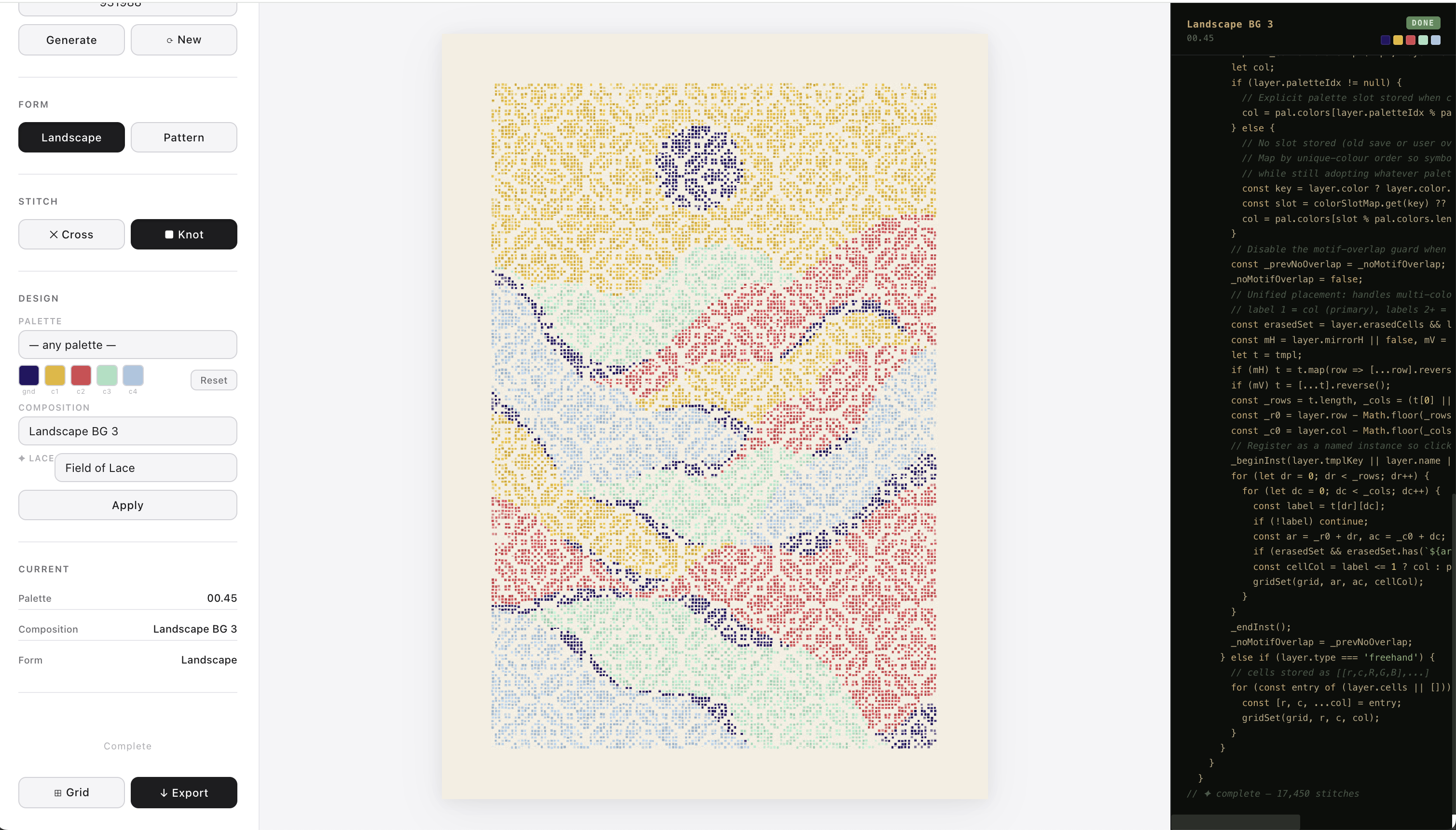
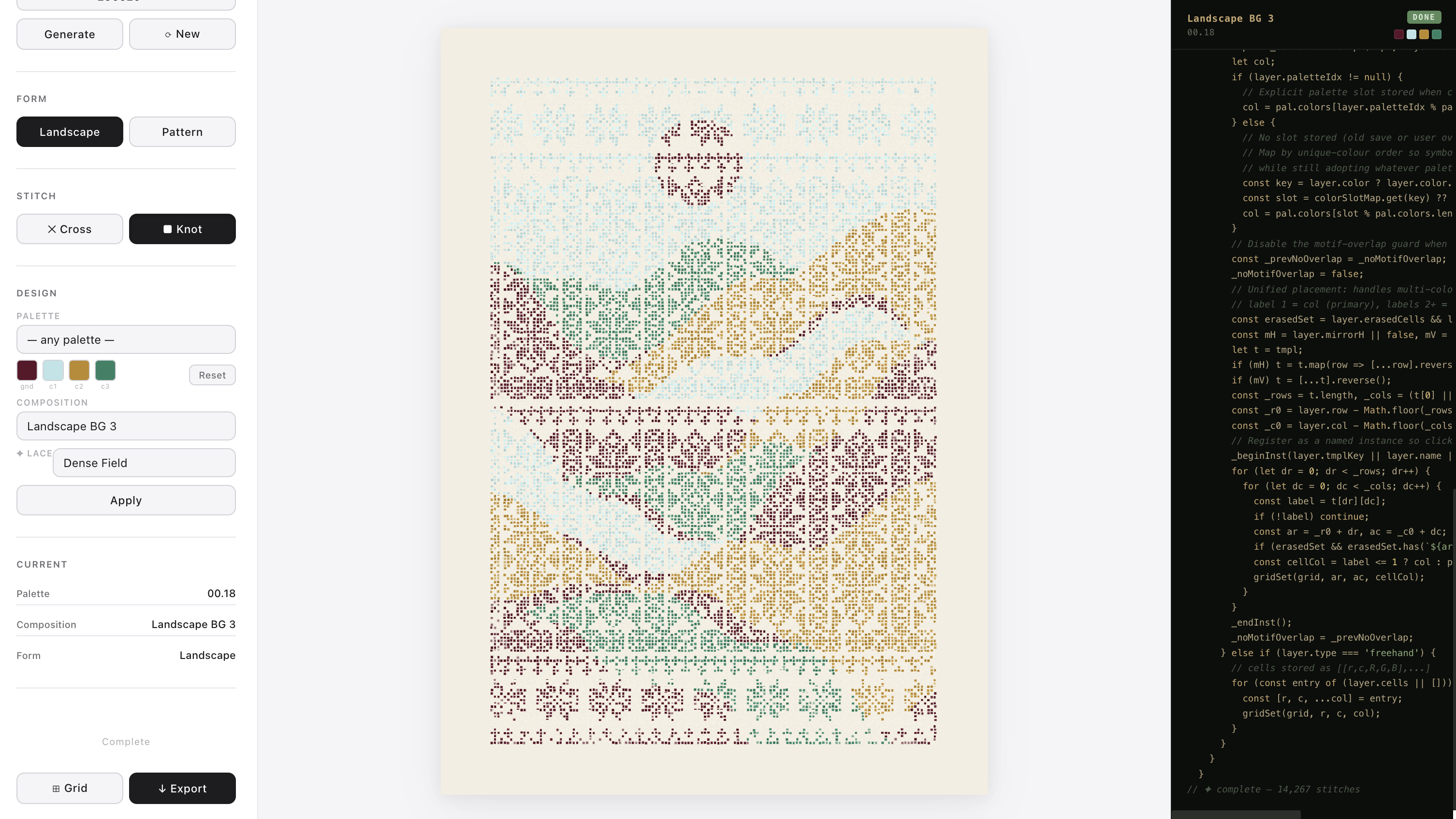
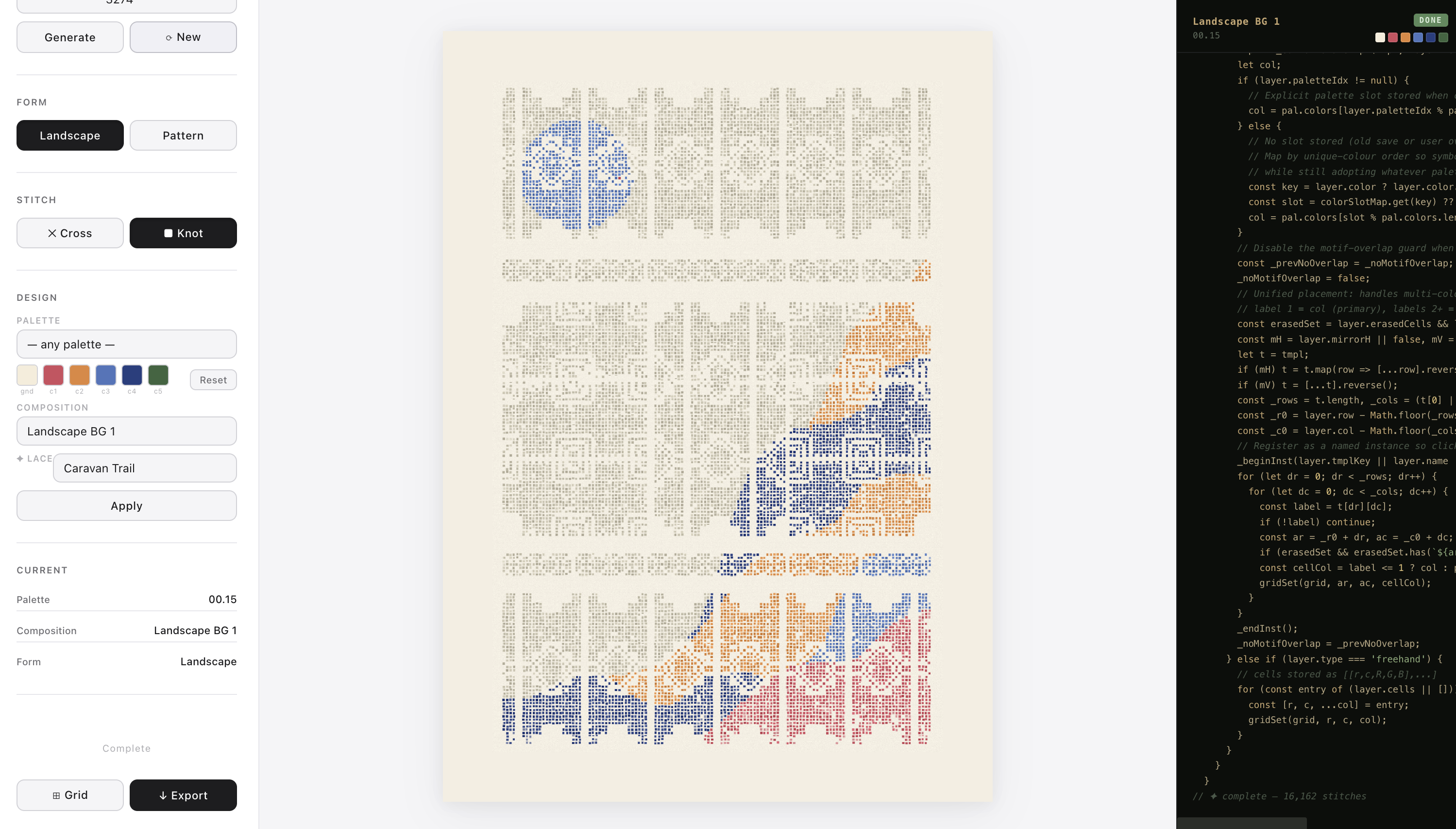
A second output mode layers lace compositions over painted hillscape backgrounds. Tatreez as land. Land as tatreez.
The motifs that once mapped a woman's village now map a remembered landscape — one that exists in the stitch, even when it cannot exist on a map.
Landscape — Field of Lace
Landscape — Dense Field
Landscape full view
The Editor
Artist hands on algorithmic cloth.
Composition Place motifs from any of 30+ village traditions onto a freeform canvas — mixing lineages that rarely appeared together.
Zone Painting Brush background zones to set terrain and color regions — the embroidery adapts to the land you define.
Symbol Search Browse 970+ motifs by village, form, or category — each one sourced, attributed, and documented.
Save & Generate Compositions are saved and loaded directly into the studio, where they become the basis for generative output.
The Editor
The Archive
A vocabulary built to last.
970+
digitized motifs
30+
Palestinian villages
999k
possible compositions
Each motif carries its origin — village, region, historical period. The archive is not a database. It is a living record.
Featured landscape composition
Limited Editions
Each seed is a signed, numbered work.
Select compositions are printed on archival linen-texture paper. Each edition bears its seed number, palette name, village motif origins, and composition title.
Proceeds from edition sales go directly to humanitarian relief organisations working in Palestine.
The Activation
An interactive exhibition, not a static show.
  • Live Generation Visitors input a seed or generate one at random. The composition renders itself in real time — stitch by stitch — on a large-format screen.
  • Educational Context Each composition is paired with the motifs it draws from — their village origins, their meanings, their histories displayed alongside the work.
  • Edition Prints & Fundraising Archival prints available for purchase. All proceeds support Palestinian humanitarian relief. A receipt of solidarity, as much as of art.
Exhibition view
Woven in Code
"Tradition is not a museum.
It is a method."
The patterns exist. The motifs exist. The hands that made them existed.
We built the tool so they could keep speaking.
All edition proceeds go to Palestinian relief
1 / 14